It is claimed that big cows can eat more feed and therefore produce more milk. Is it really the truth or is it just a myth?
Find out in part 3 of Myth Busters!
It is claimed that big cows can eat more feed and therefore produce more milk. Is it really the truth or is it just a myth?
Find out in part 3 of Myth Busters!
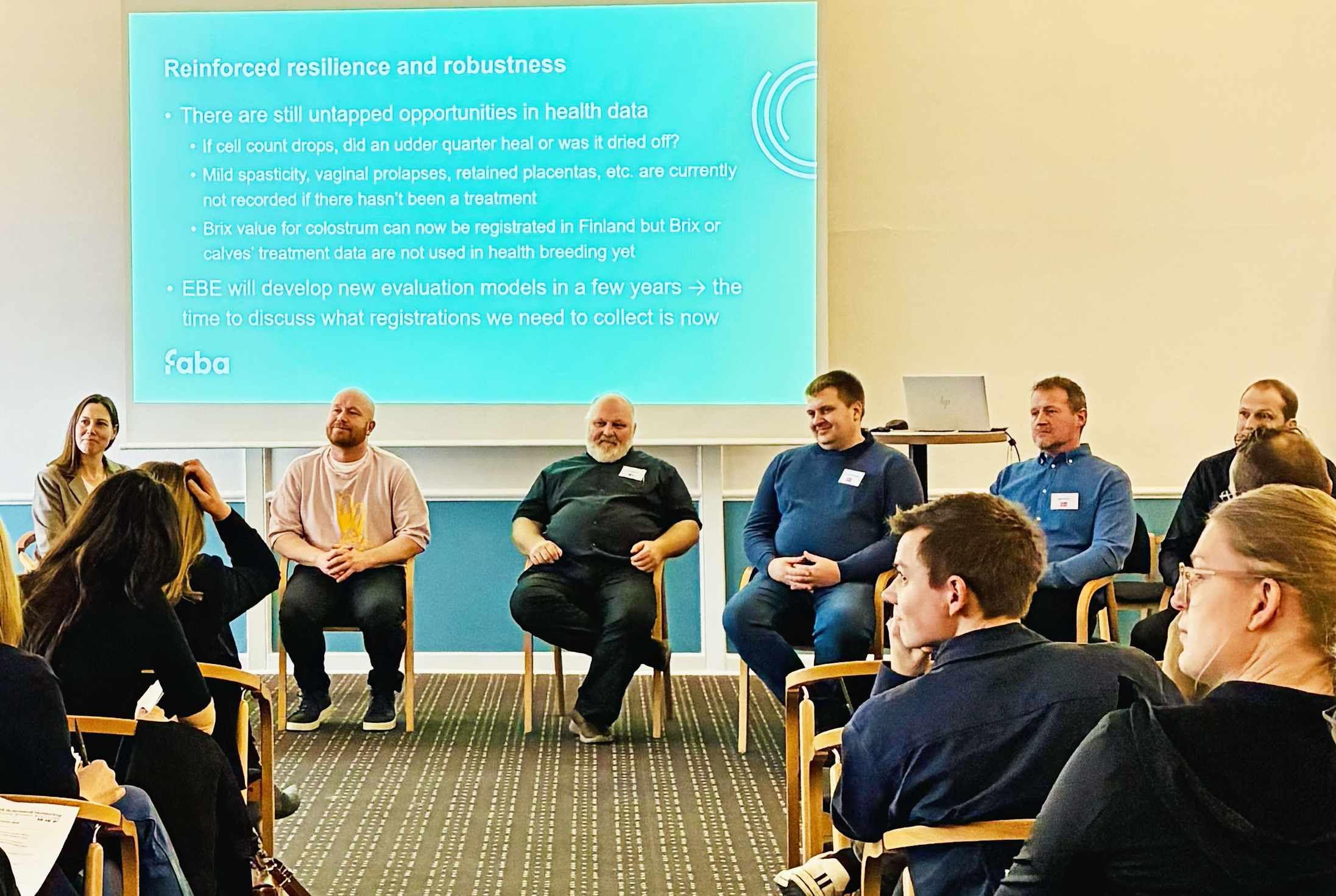
The NAV Dairy Cattle Workshop was held on 20 January in Copenhagen, bringing together stakeholders for discussions on NAV’s strategy 2026–2028, the upcoming NTM revision, and current Nordic research in methane emissions and climate-smart breeding. The workshop also included updates from EBE and breed-group discussions on proposed weights of Saved Feed in NTM. Workshop presentations are available via the link below.
The latest NAV routine genomic evaluation took place as scheduled. NAV carried out genomic prediction for Holstein, RDC and Jersey. Genomic breeding values of bulls are updated to NAV Bull Search after each evaluation.
Read more from the NAV newsletter.
The fourth NAV routine evaluation for this year took place as scheduled. NAV Bull Search has been updated with new EBV’s and GEBV’s and NAV Beef Search is also updated with new beef x dairy breeding values.
In this evaluation, the single-step method was introduced for temperament, replacing the previous two-step method. The single-step approach uses all information from genotyped and non-genotyped animals simultaneously. Read more in the paper Improved breeding values for Temperament.
Several improvements were introduced in the general health evaluation.
NAV has also released breeding values for purebred beef bulls and cows as scheduled. Beef breeding values are updated to NAV Beef Search too.
Read more about the evaluation and changes:
Breeding makes a significant contribution to efficiency improvements in Nordic cattle herds. In this article series, the focus will be on what breeding has contributed over the past 10 years. Production has the highest economic value in NTM and that is why the article series starts with production traits.
Read more from the paper Breeding has led to great improvements for production